
Vocabulary Builder offline Android app
A phone app that works without a connection.
The need
Learn French and English words every day, even on a weak connection.
What we built
One codebase for Android and the web, with spaced reviews, audio playback and local backup.
- React Native
- Expo
- TypeScript
- SQLite
The results
- 2
- platforms, one codebase
- 0
- cloud dependency
What the app does, screen by screen
Vocabulary Builder store feature graphic
- Cross-platform vocabulary learning app shipped to Web and Android from one TypeScript and Expo codebase.
- Combines SM-2 spaced repetition, bilingual word tracking, and hands-free podcast narration.
- Keeps every core workflow offline-first, with ZIP-based backup instead of cloud dependency.
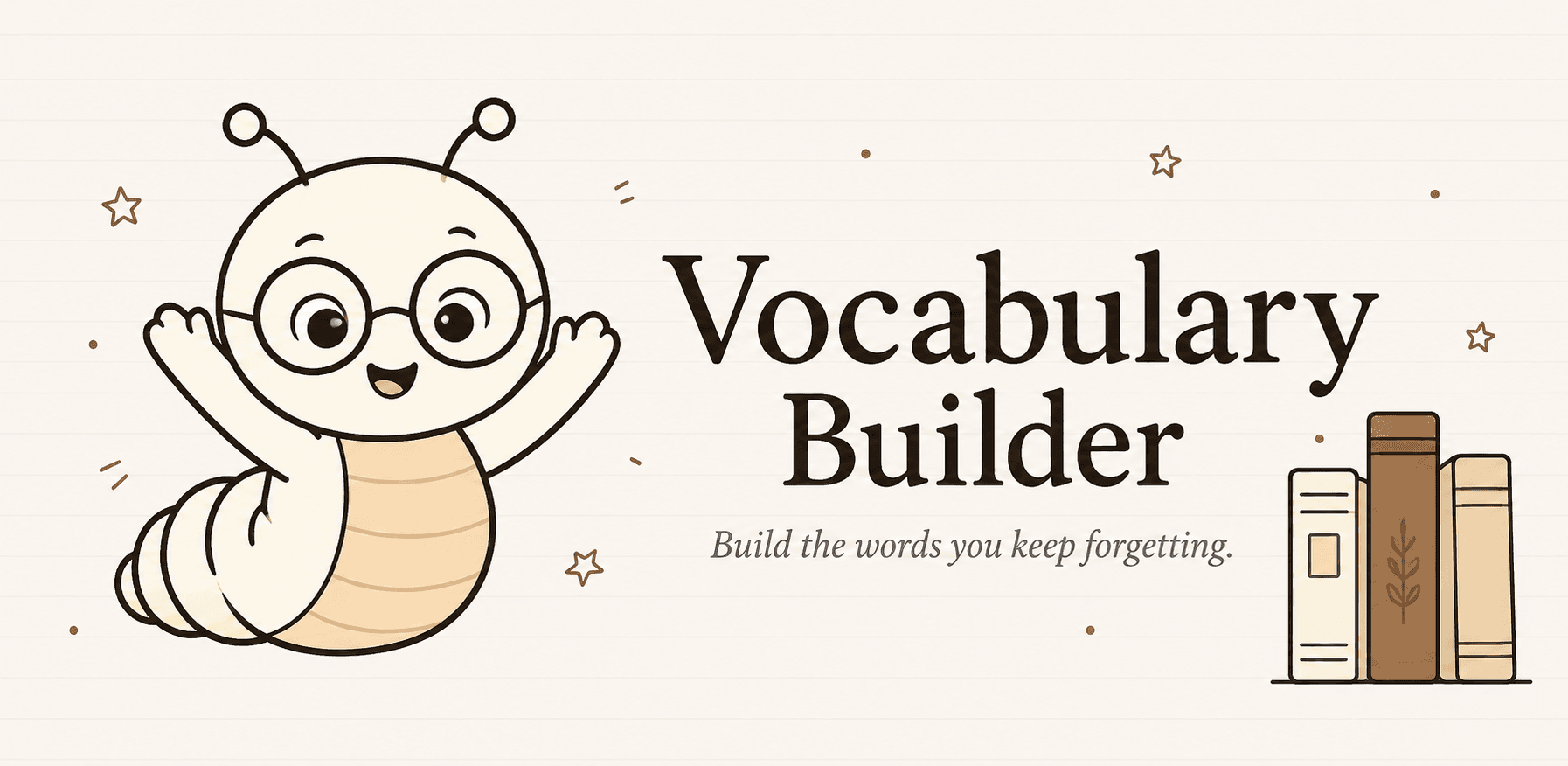
Add words with context
- Captures the core word-entry workflow for adding vocabulary with definitions and examples.
- Supports bilingual EN/FR tracking from the same form-driven experience.
- Stores words locally through the shared domain model and repository layer.
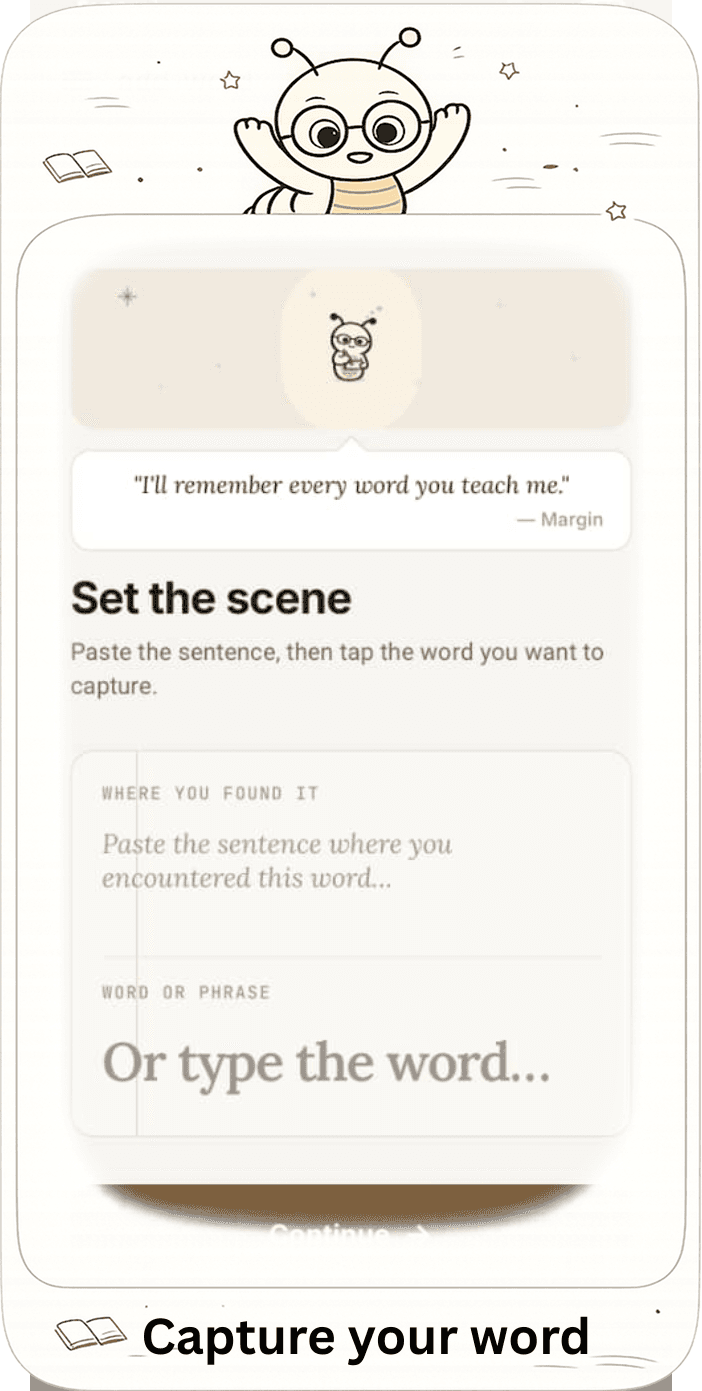
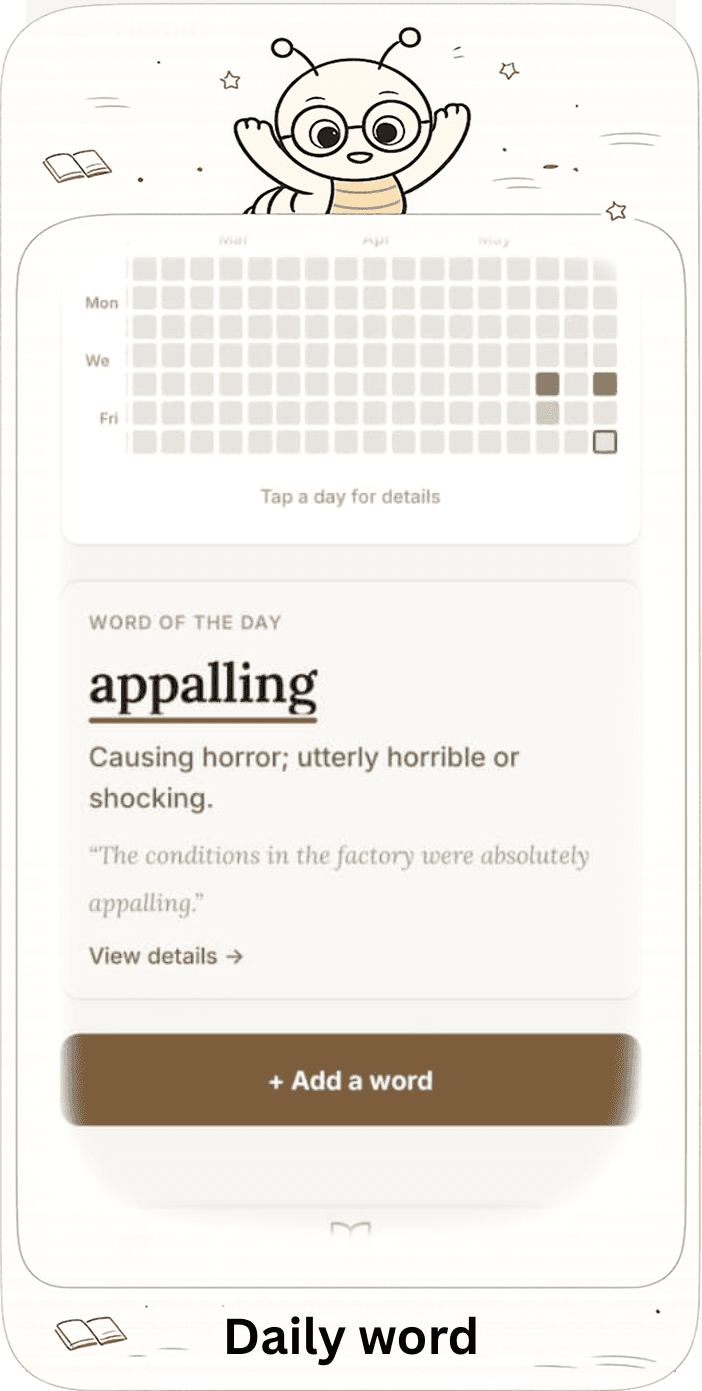
Word of the day
- Highlights a daily vocabulary prompt to make returning to the app feel useful immediately.
- Surfaces definitions, translations, and context in a compact mobile-first view.
- Reinforces regular study habits without requiring a full review session.
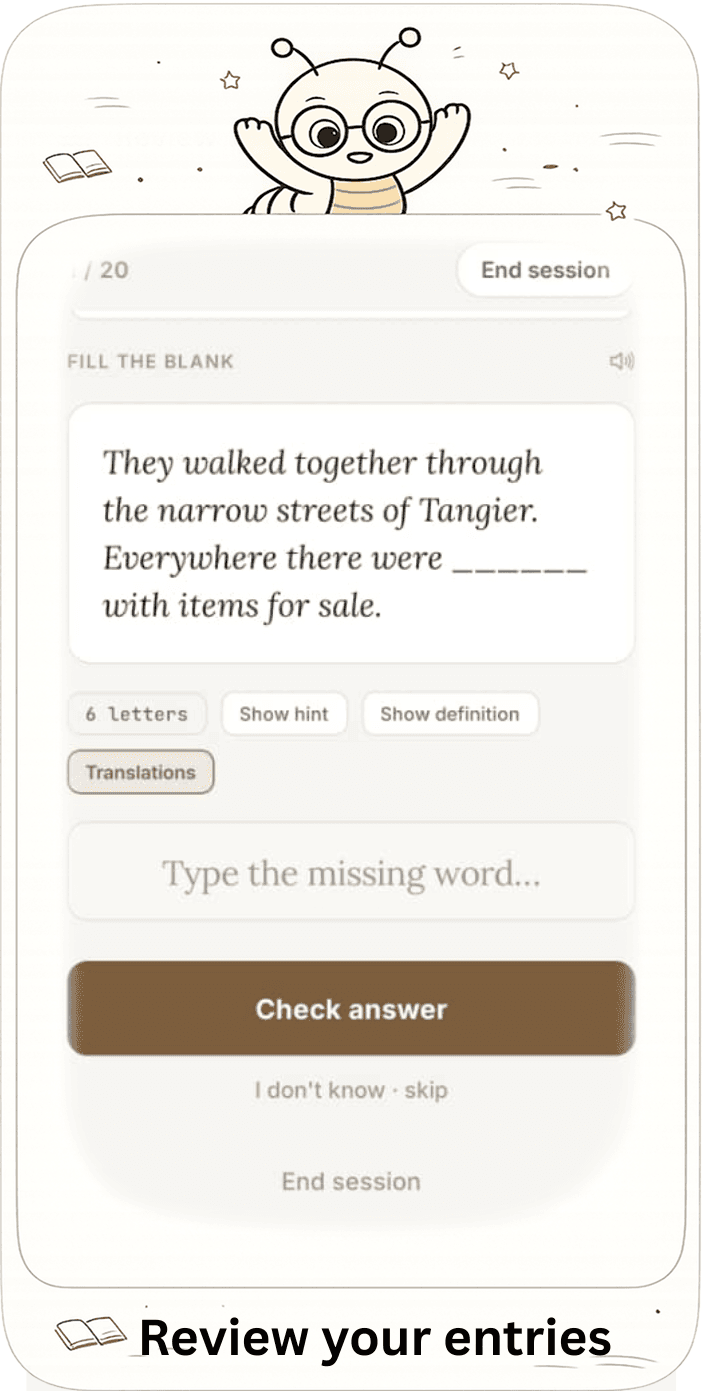
Review your words
- SM-2 scheduling prioritizes words that are due instead of showing a flat flashcard queue.
- Review flow tracks recall quality and updates the next review date automatically.
- Built to support daily retention with minimal manual organization.
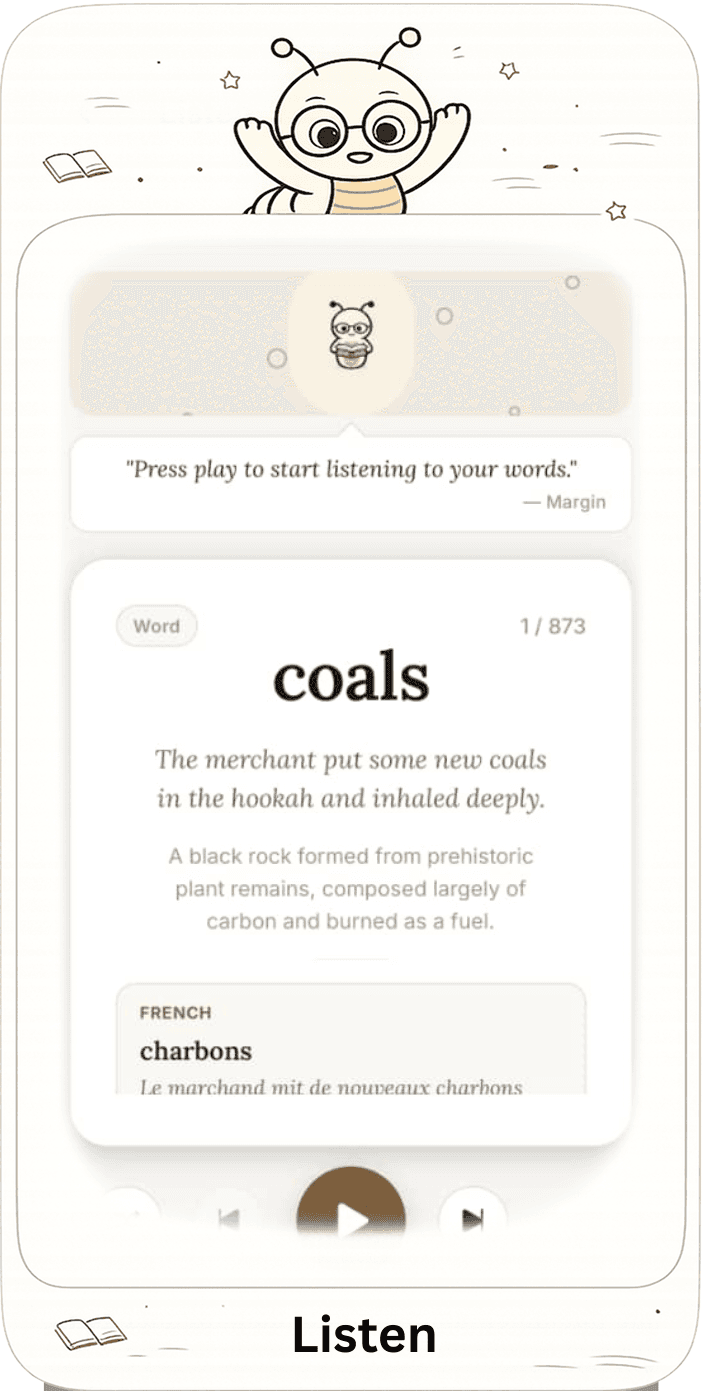
Listen mode
- Hands-free podcast narration lets users review vocabulary while walking, commuting, or resting.
- Reads saved words with definitions and context so review is not limited to screen time.
- Reuses the same vocabulary data as the visual review flow.
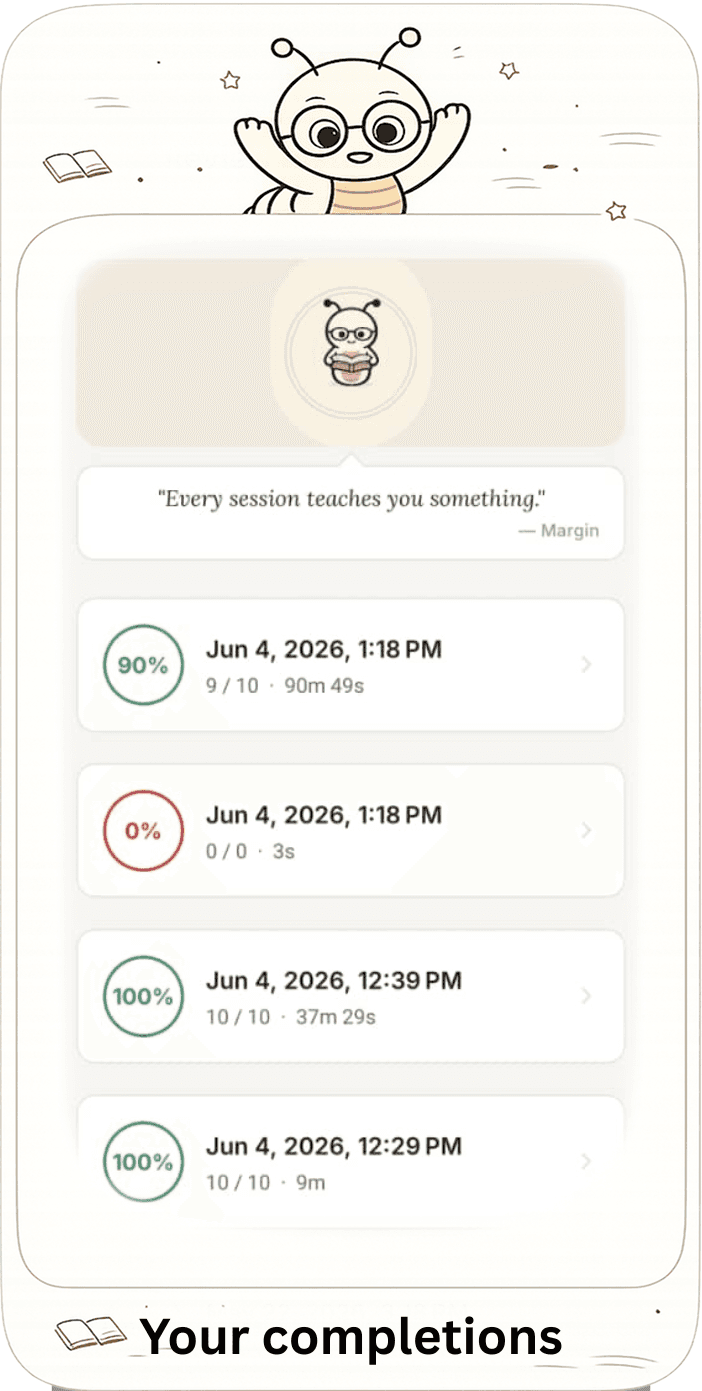
Learning statistics
- Progress views summarize review activity, streaks, and vocabulary growth.
- Gives learners feedback on consistency and retention over time.
- Keeps personal analytics local with the rest of the offline-first app data.
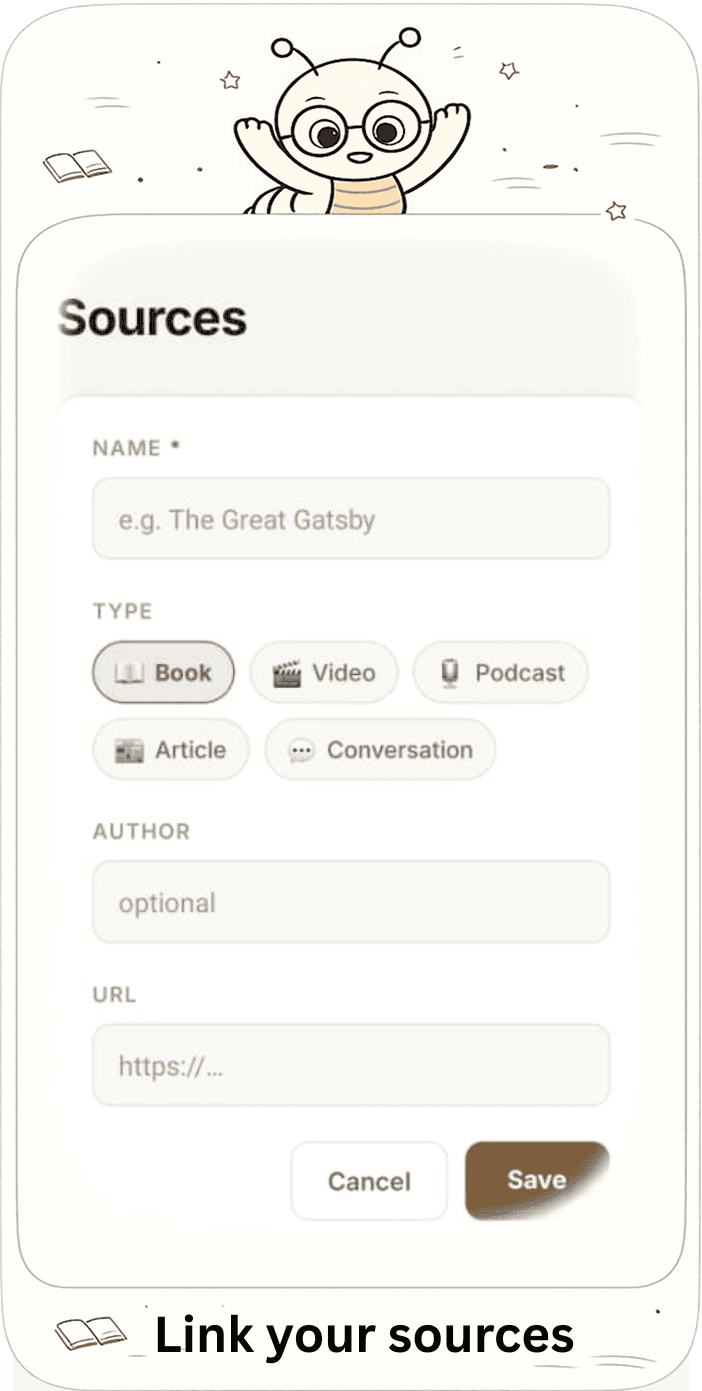
Source-based organization
- Words can be grouped by source so learners remember where vocabulary came from.
- Supports books, articles, videos, courses, or any custom learning context.
- Source metadata is part of the clean domain model instead of UI-only tagging.
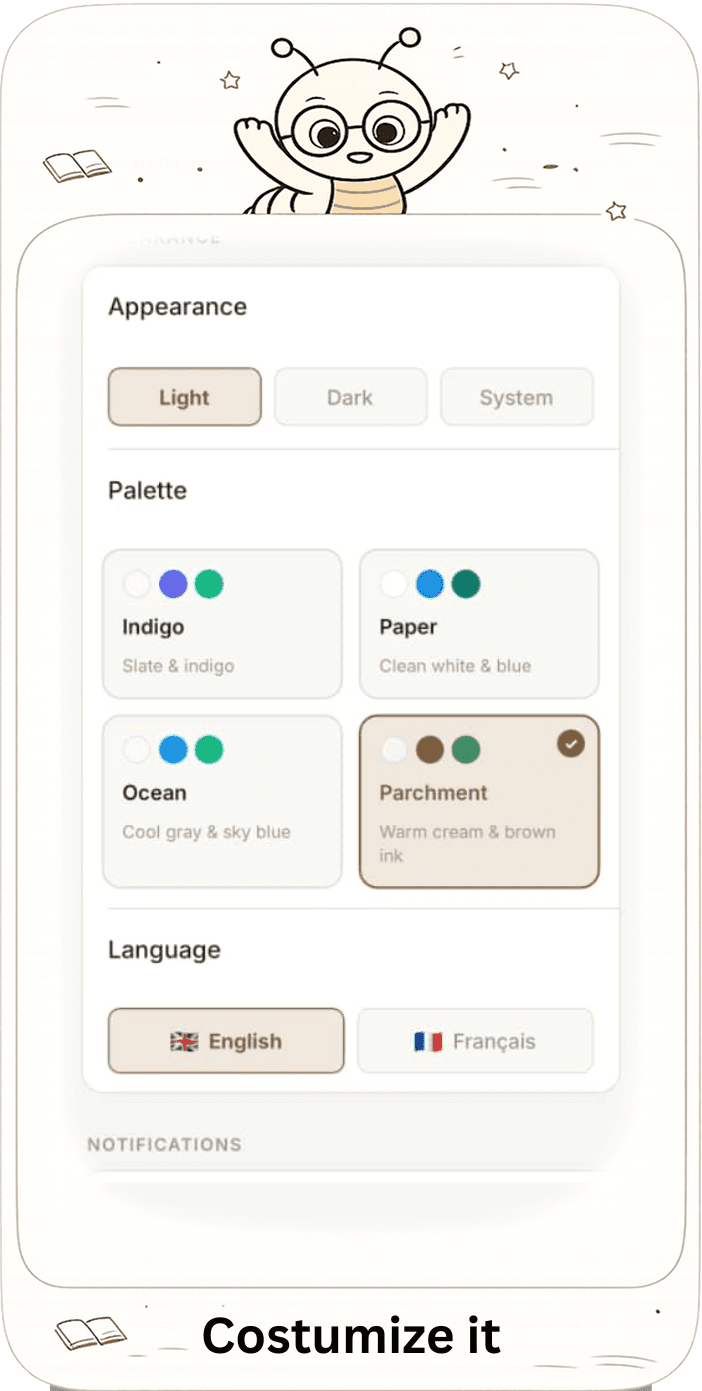
Offline-first backup and preferences
- Backup and restore workflows use ZIP-based sync to avoid cloud dependency.
- Language and app preferences are available from a focused settings screen.
- Native and web storage implementations stay interchangeable behind shared interfaces.
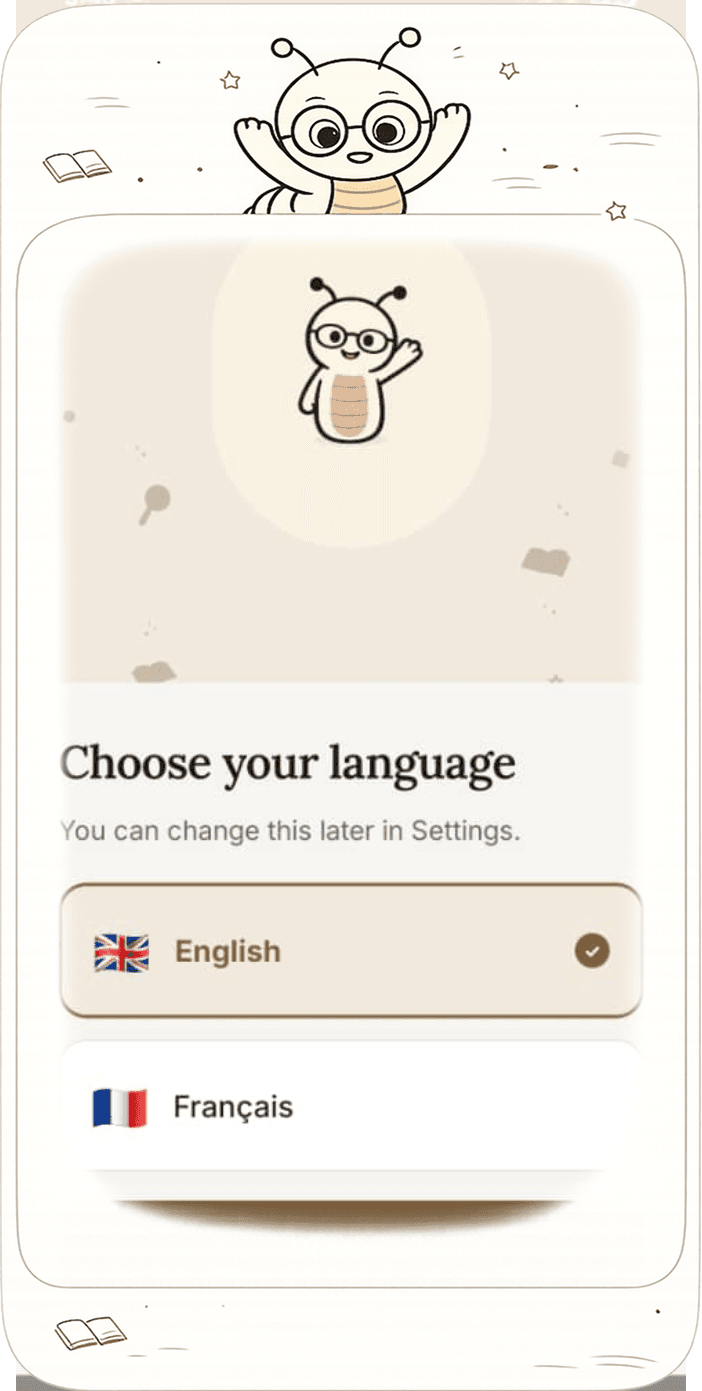
Choose your language
- Onboarding supports English and French usage from the start.
- Language choice connects to the app's localized vocabulary workflow.
- Keeps the first-run experience aligned with the bilingual product scope.
A project like this one?
Describe it in two lines on WhatsApp, and we reply directly.
Next projectplotlive